
A consumer’s take on everyday cameras, travel in Europe, and what actually matters
This post may contain affiliate links which means I may earn a small commission if you purchase through the link at no extra cost to you. Please read my disclosure & disclaimers here.
I’ve owned and used all three of these cameras, and this isn’t a technical breakdown or spec comparison. This is about how these cameras feel in real life — traveling through Europe, walking around cities like Barcelona, and trying to capture moments without carrying a huge professional setup.
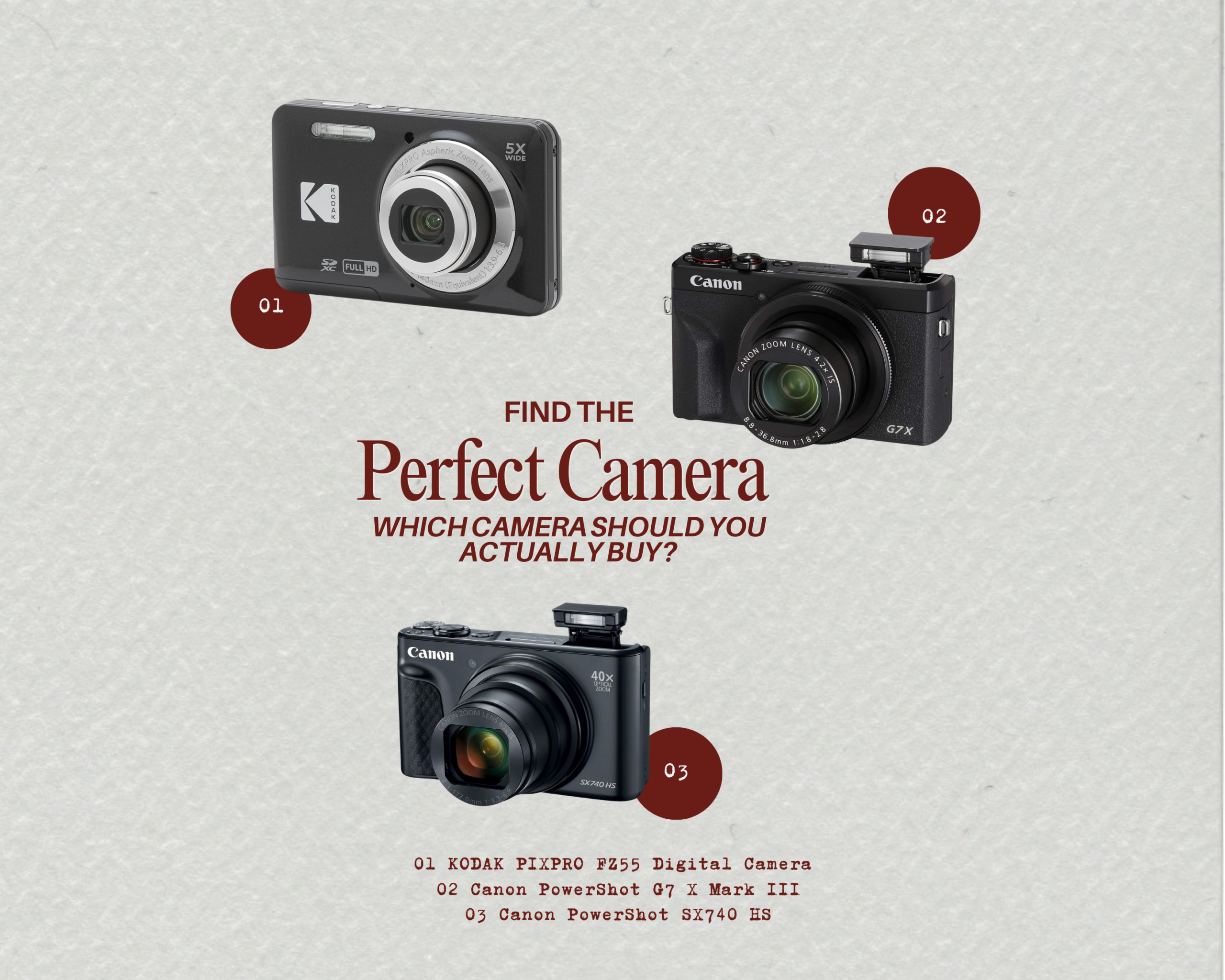
Kodak Pixpro FZ55 — Cheap, Lightweight, and Low-Stress
The Kodak Pixpro FZ55 is cheap, lightweight, and genuinely one of the best budget point-and-shoot cameras I’ve used.
It’s small, affordable, and has a built-in flash. The image quality is pretty good for the price, but the flash isn’t very strong — you need to be close to your subject for it to work well. One thing that stands out is the processing time between shots. After taking a photo, it feels like it takes forever before you can take the next one. I’m not sure if that’s shutter lag or just slow processing, but it’s noticeable.
That said, the camera applies a smoothing effect straight out of the camera, which I actually like. The photos don’t really need editing afterward, which makes this a true point-and-shoot.
This is the camera I reach for when traveling, especially in Europe and places like Barcelona, where pickpocketing is a real concern. Because it’s inexpensive, there’s way less stress carrying it around. Pro tip: attach an AirTag, and get an SD card to USB-C adapter so you can transfer photos straight to your phone. That way, even if something happens to the camera, your photos are safe.
That advice comes from experience. One summer afternoon, I lost this camera on a rooftop. What made us sad wasn’t the cost of replacing the camera — it was the photos we thought we lost. Someone turned it in, and we were just relieved to get the photos back. In the end, it confirmed that the photos matter more than the gear. Replacing the Kodak would’ve been annoying because of availability, but losing the photos would’ve been worse.
Overall, it’s small, lightweight, affordable, and low-stakes. A great camera to bring everywhere without overthinking it.
Canon G7 X Mark III — High Quality, Higher Pressure
I’m an avid photographer, and I wanted a point-and-shoot that didn’t feel like carrying a massive professional camera, but still delivered very high-quality images. That’s where the Canon G7 X Mark III fits.
This camera has a built-in flash, fast shutter and processing speed, and lots of controls. It performs extremely well in low light and takes beautiful photos during sunsets. When everything lines up, the results are incredible.
But this isn’t a carefree camera.
If I didn’t already have photography experience — or if I hadn’t used the Kodak first — this would feel overwhelming as an everyday point-and-shoot. I often find myself adjusting settings so photos don’t get overblown. Sometimes I even miss the shot because I’m messing with exposure or other controls.
Yes, there are automatic modes, but I really think this camera shines when you understand manual settings. When it hits, it hits hard. Still, the price feels high for something that’s supposed to be fun.
Because of that, I don’t always reach for it. If I don’t have much space in my bag, or I want something lower-stakes, I grab the Kodak instead. It’s smaller, lighter, and takes the pressure off trying to get the perfect shot — or worrying about losing an expensive camera.
Canon PowerShot SX740 — The Midpoint That Misses the Mark
The Canon PowerShot SX740 feels bulky for what it offers. I understand it’s not as large as the G7 X in some ways, but for its price point, I expect it to be better.
The flash is my biggest issue. It makes my skin look extremely overblown, and especially for darker skin tones and complexions, I wouldn’t recommend it. The results just aren’t flattering.
This is one of the rare cases where I don’t think the “middle option” is the best choice. I don’t really understand why people recommend this as the best alternative to the G7 X, other than the fact that it’s more readily available and at a lower price point.
To me, that argument feels like saying: buy mint tea instead of matcha because matcha is sold out and cost more. Availability and price alone doesn’t make something a good substitute.
Final Thoughts — Which One Should You Buy?
- Kodak Pixpro FZ55:
Best for budget travelers, casual photographers, and anyone who wants a lightweight, stress-free camera for Europe or everyday life. - Canon G7 X Mark III:
Best for photographers and creators who care deeply about image quality and don’t mind adjusting settings — or paying more. - Canon PowerShot SX740:
Personally, this is the one I’d skip unless availability is your only concern.
At the end of the day, the best camera is the one you’ll actually carry, use, and enjoy. For me, that’s why the Kodak still earns a spot in my bag.